The Archive of Nature
This commitment to place is inseparable from her technique. Working primarily in woodcut — a medium that demands patience, physical pressure, and an intimate knowledge of material — she constructs images that function simultaneously as artworks and as archive. Each plant form she carves and prints becomes a record: precise, deliberate, and quietly urgent. The woodblock retains the grain of the wood, the irregularities of pressure, the faint texture of the cotton paper beneath — details that keep her images grounded in the physical world even as they tend toward the graphic and the bold.
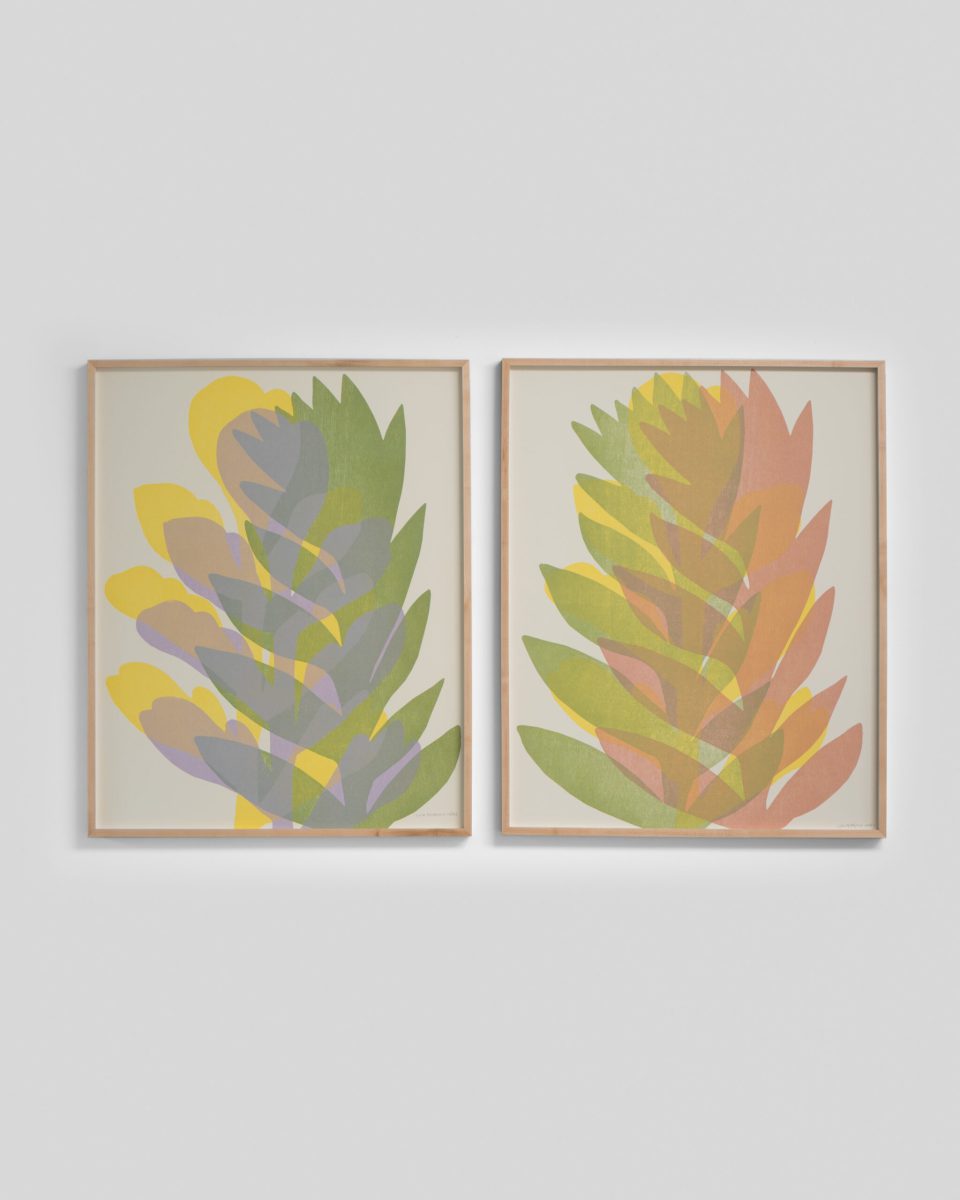
Her series HELECHOS, produced on cotton paper, distills this impulse to its most concentrated form. The overlapping silhouettes of ferns — rendered in muted greens, warm ochres, dusty mauves, and soft pinks — carry the weight of scientific classification and something more visceral: a wish, as the artist herself has described it, that through the act of drawing she might render the plants immortal. Each print isolates a single specimen against a field of color, the layered passes of the woodblock creating a subtle transparency where forms overlap. The result is simultaneously taxonomic and tender. These are not illustrations of nature; they are arguments for its continued existence.
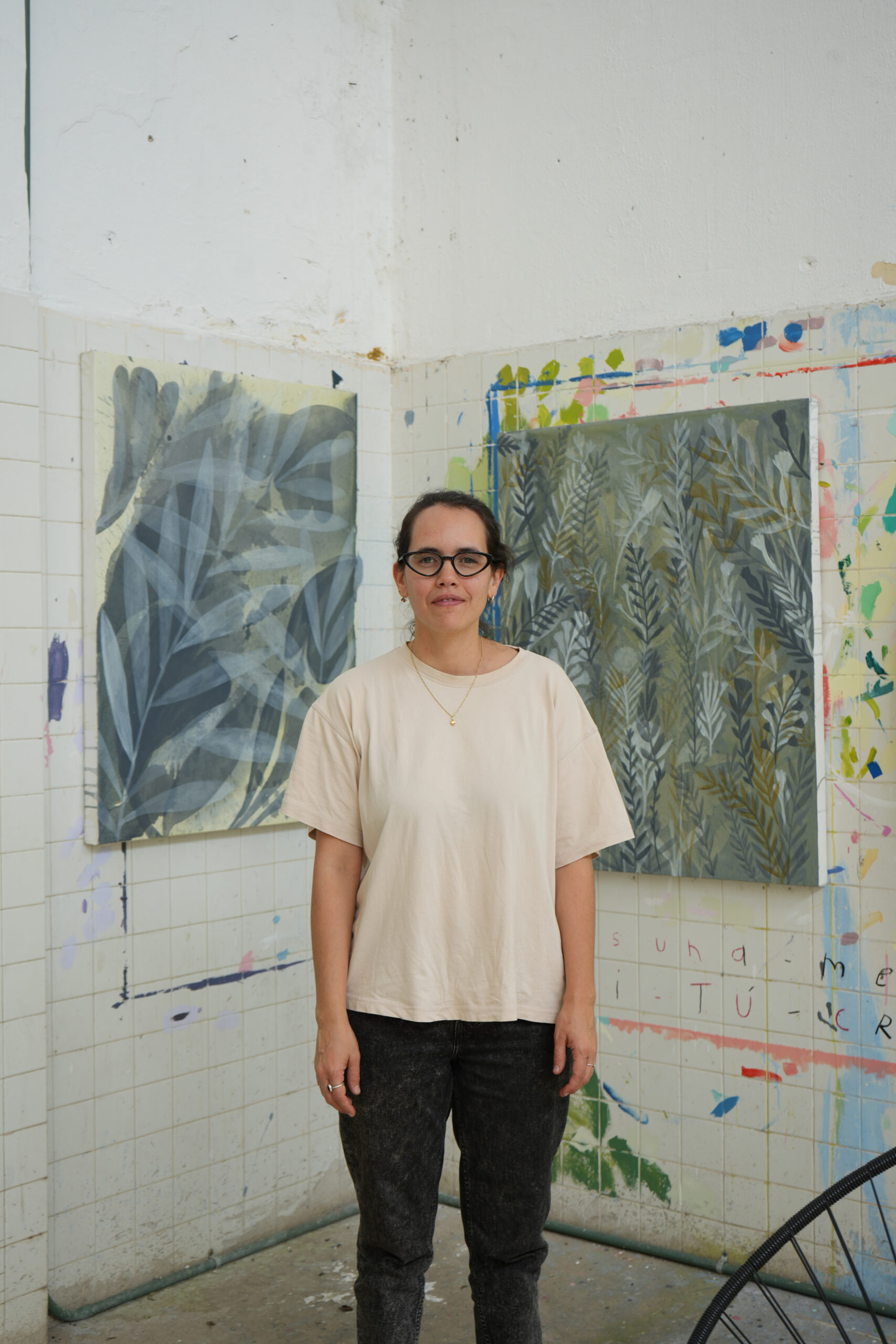
Erasing the boundaries between art and territory, her woodcuts do not merely represent the cloud forest, but actively inhabit and preserve it.
Her current body of research, JARDÍN PARA POLINIZADORES, extends this logic into the reproductive biology of cloud forest epiphytes. Tracing the nocturnal pollination cycles of moths — what Prudencio calls “rare and remarkable, fantastic and unknown” — the project moves between scientific inquiry and poetic attentiveness. Moths are essential to the survival of many epiphytic species and yet largely absent from both botanical literature and cultural imagination.
Prudencio’s work brings them into focus: through graphic records that document cycles, bloomings, and transformations, and through direct interventions in the soil itself. It is a practice in which creation and ecological activism are genuinely inseparable, and in which the artist positions herself not as an observer of the landscape but as a participant in it.
“From a sensitive and rigorous practice, she creates pieces that celebrate permanence and slowness.”
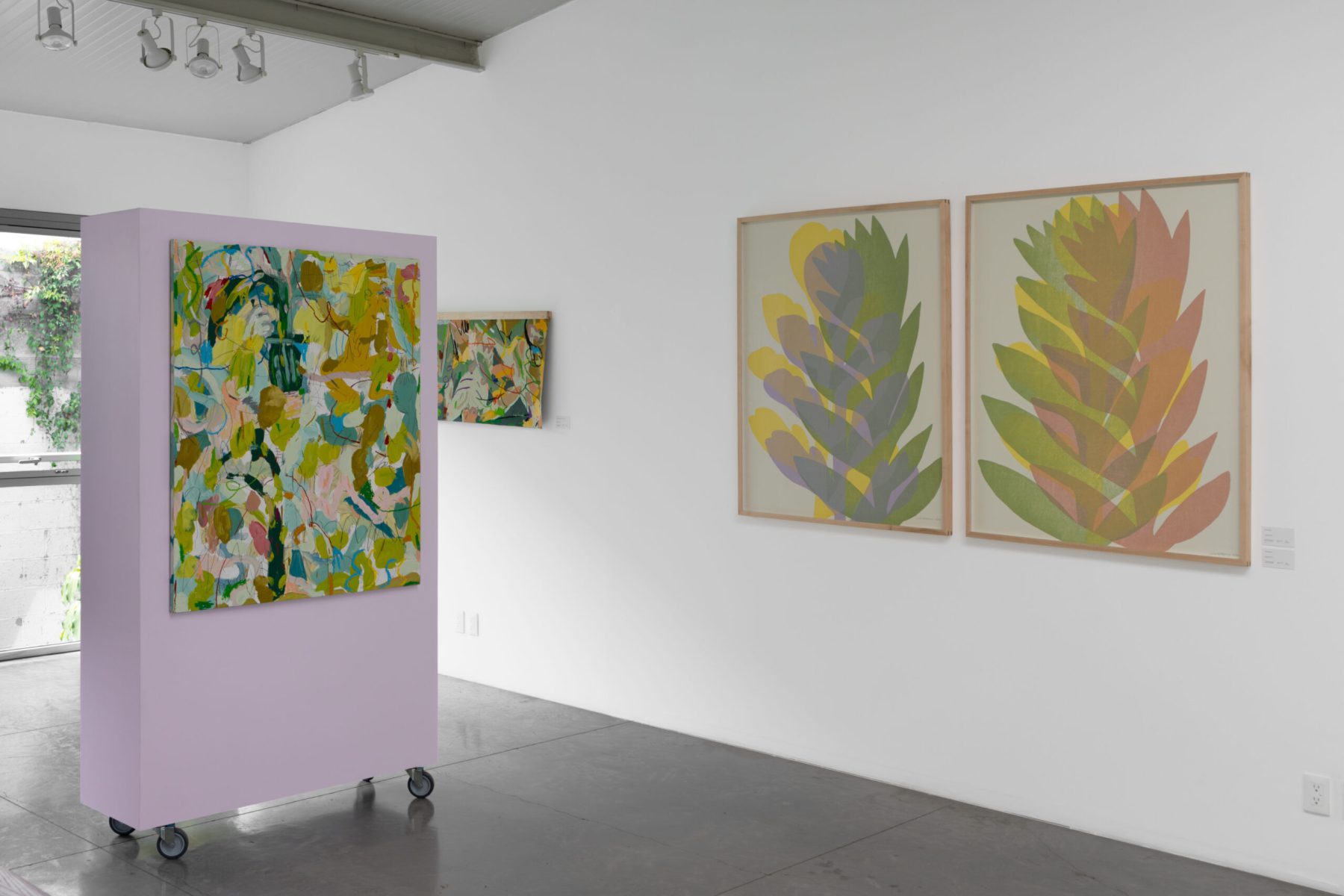
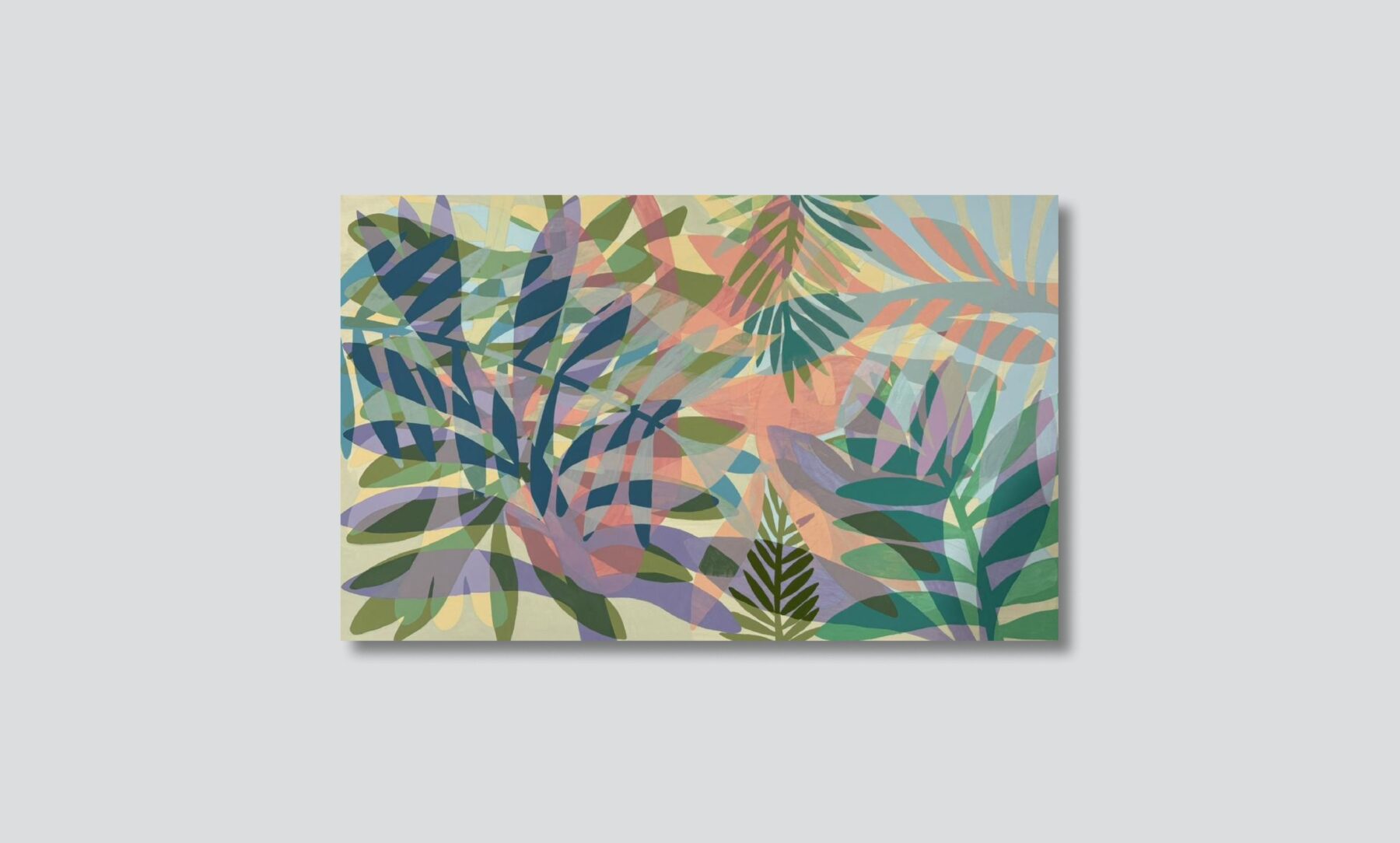
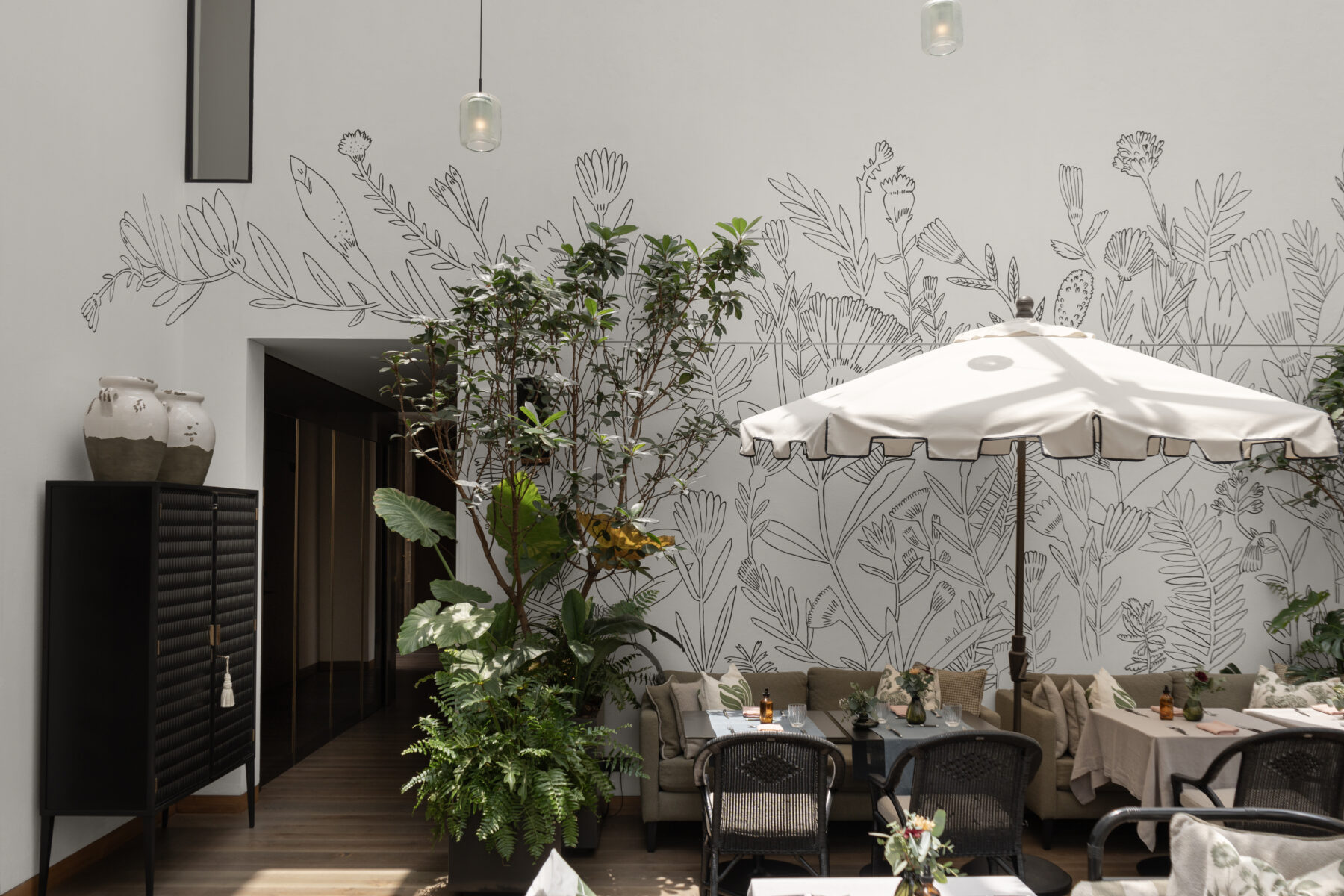
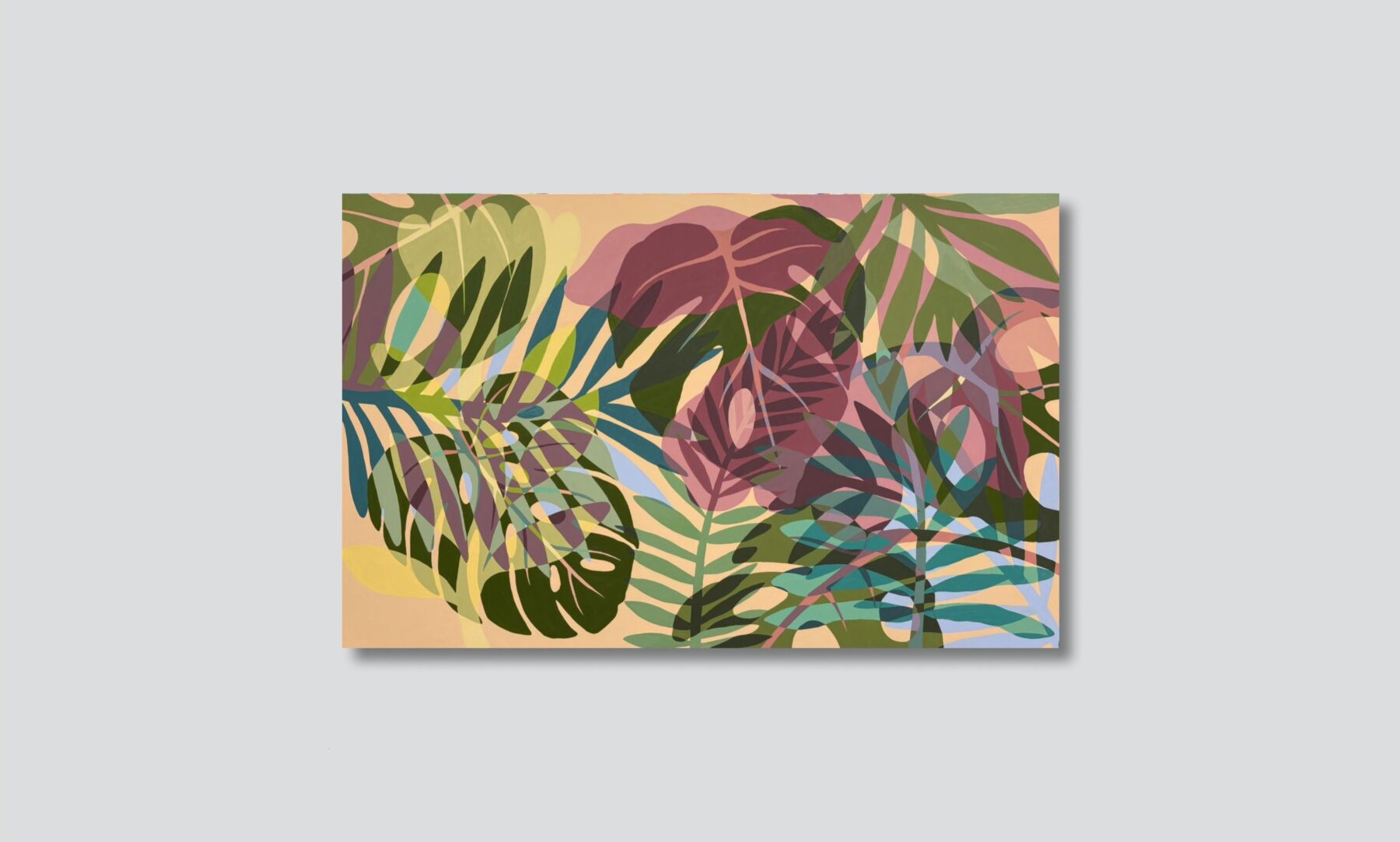
Beyond her work on paper and canvas, Lucía Prudencio also operates at an architectural scale. A key aspect of her practice is the creation of site-specific mural commissions for both interior and exterior spaces, executed in black and white or in color. Drawing from the same visual vocabulary as her printmaking, her botanical motifs expand to inhabit entire rooms, transforming spaces into environments that exist somewhere between an interior and the edge of a forest.